The Coalition to Remember
The 1906
Atlanta
Race Massacre
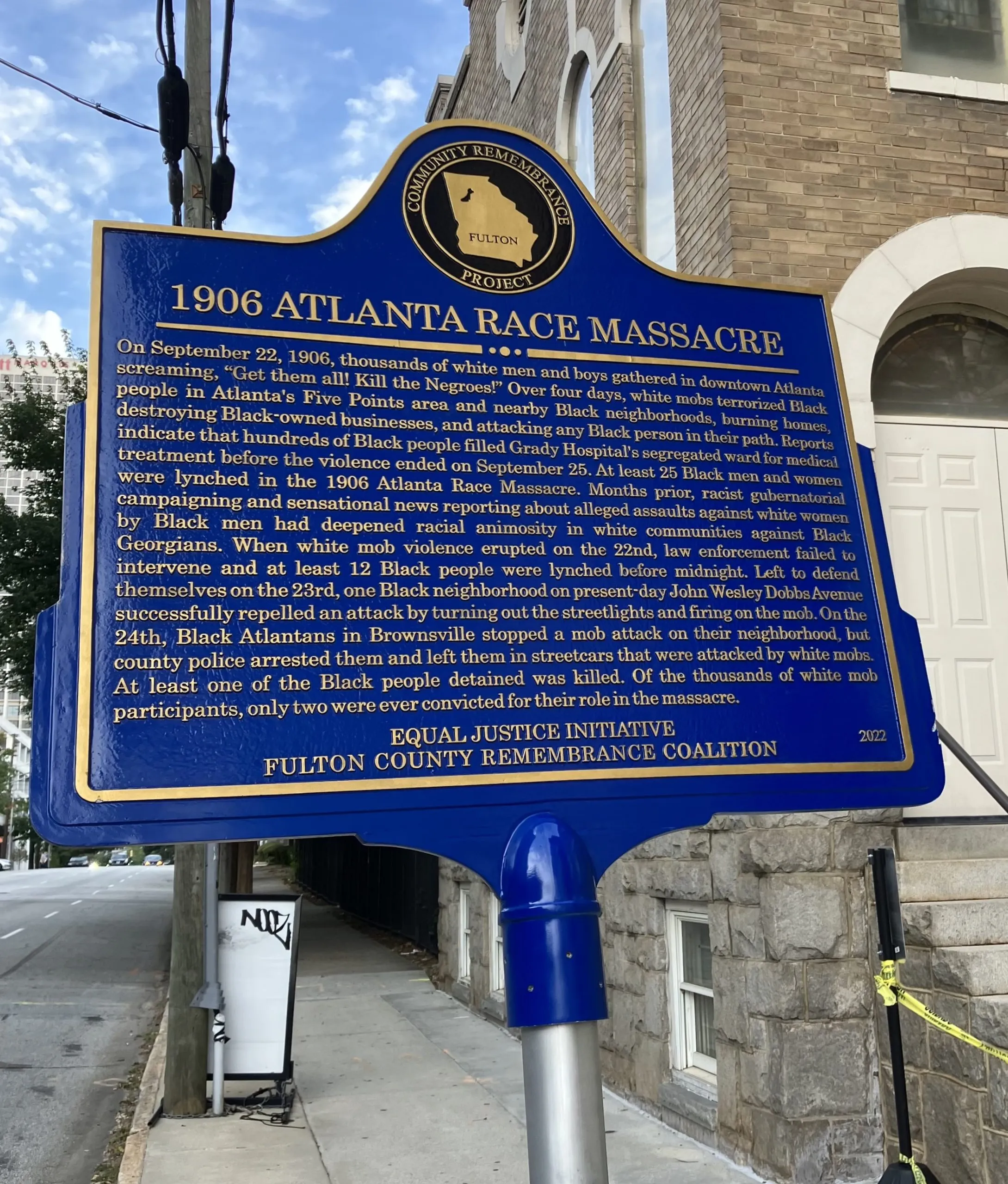
For four days in September 1906, white mobs attacked Black Atlantans across the city. At least twenty-five people were killed.
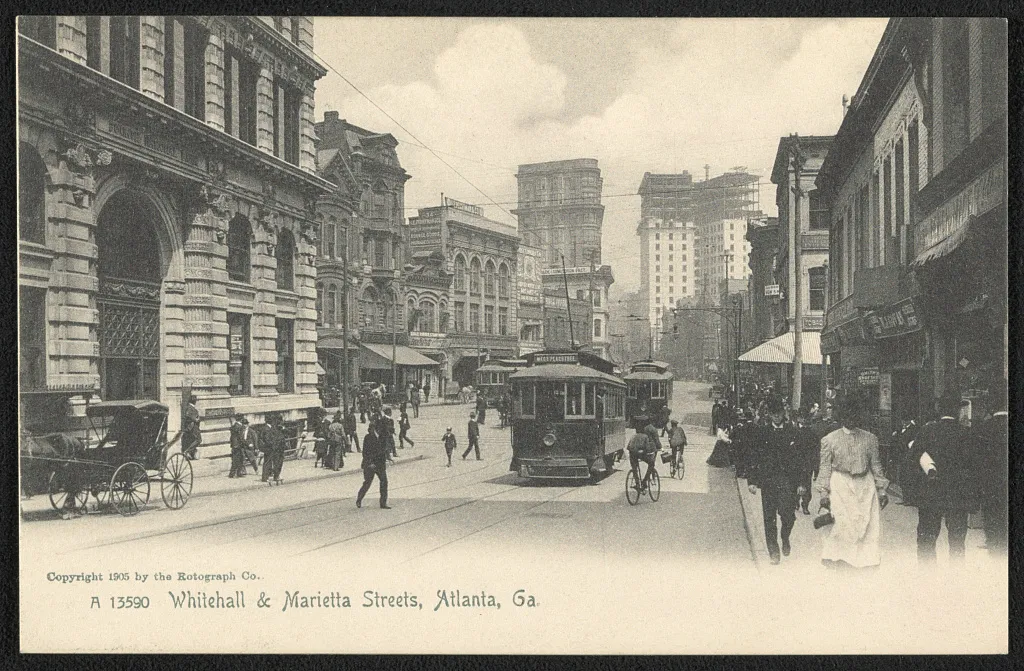
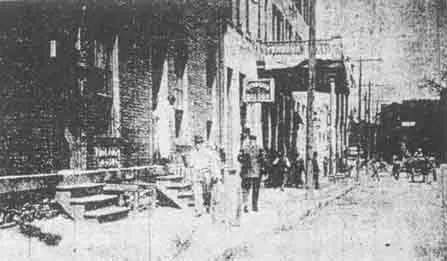
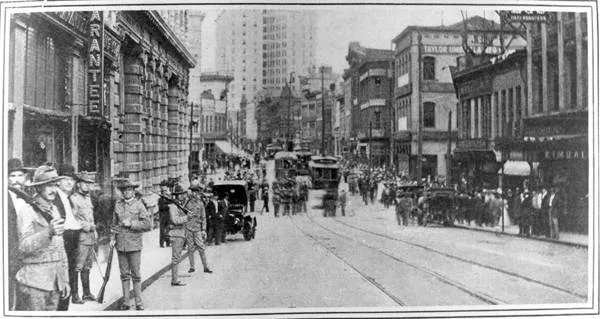
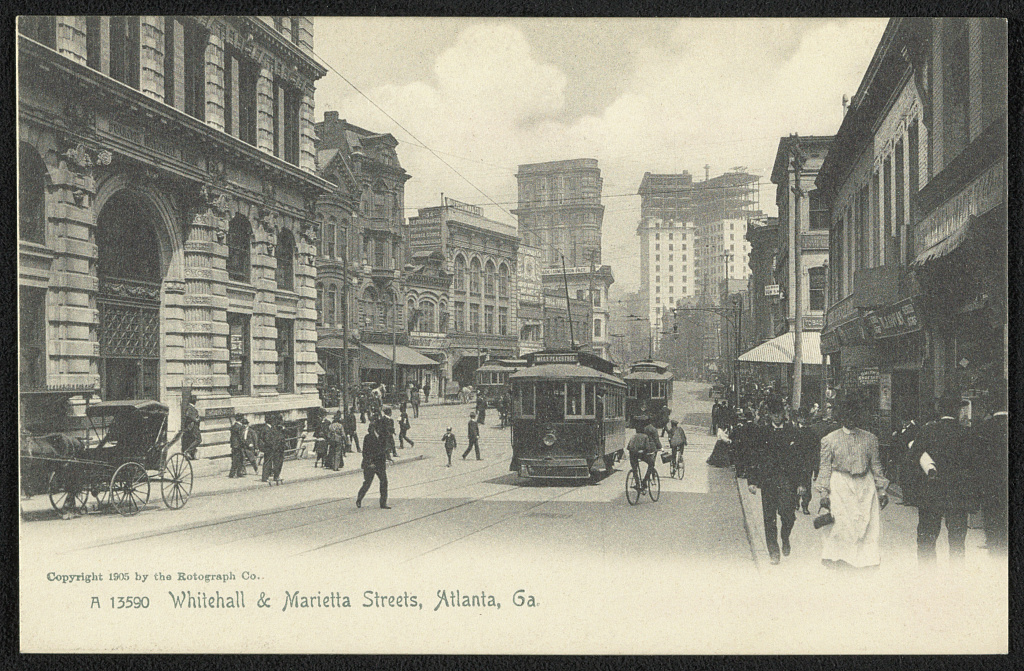
Marietta Street,
one year before.
Library of Congress · 1905
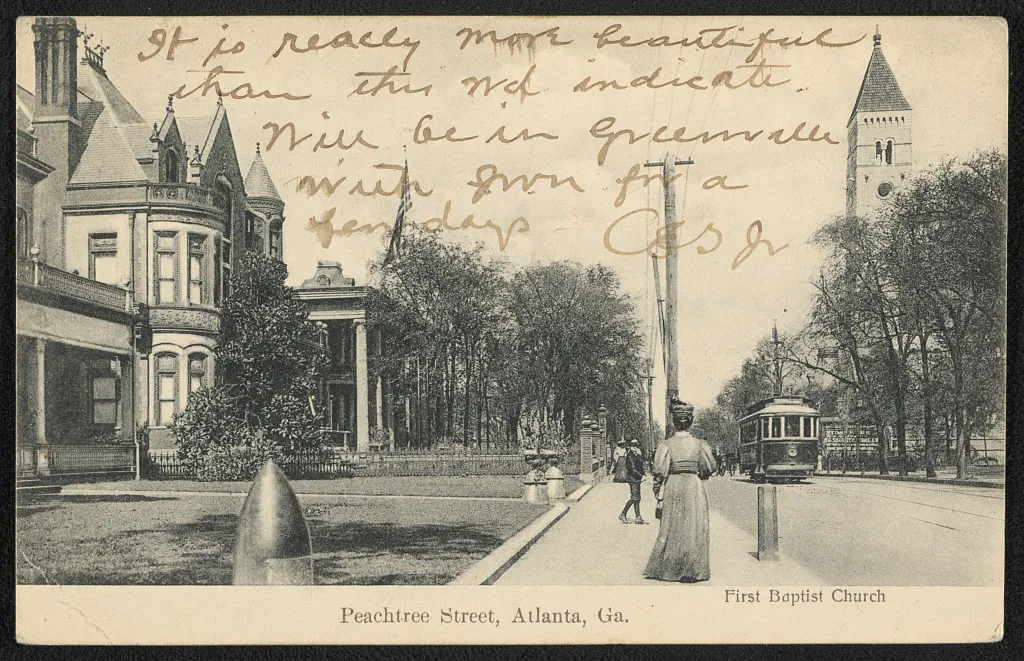
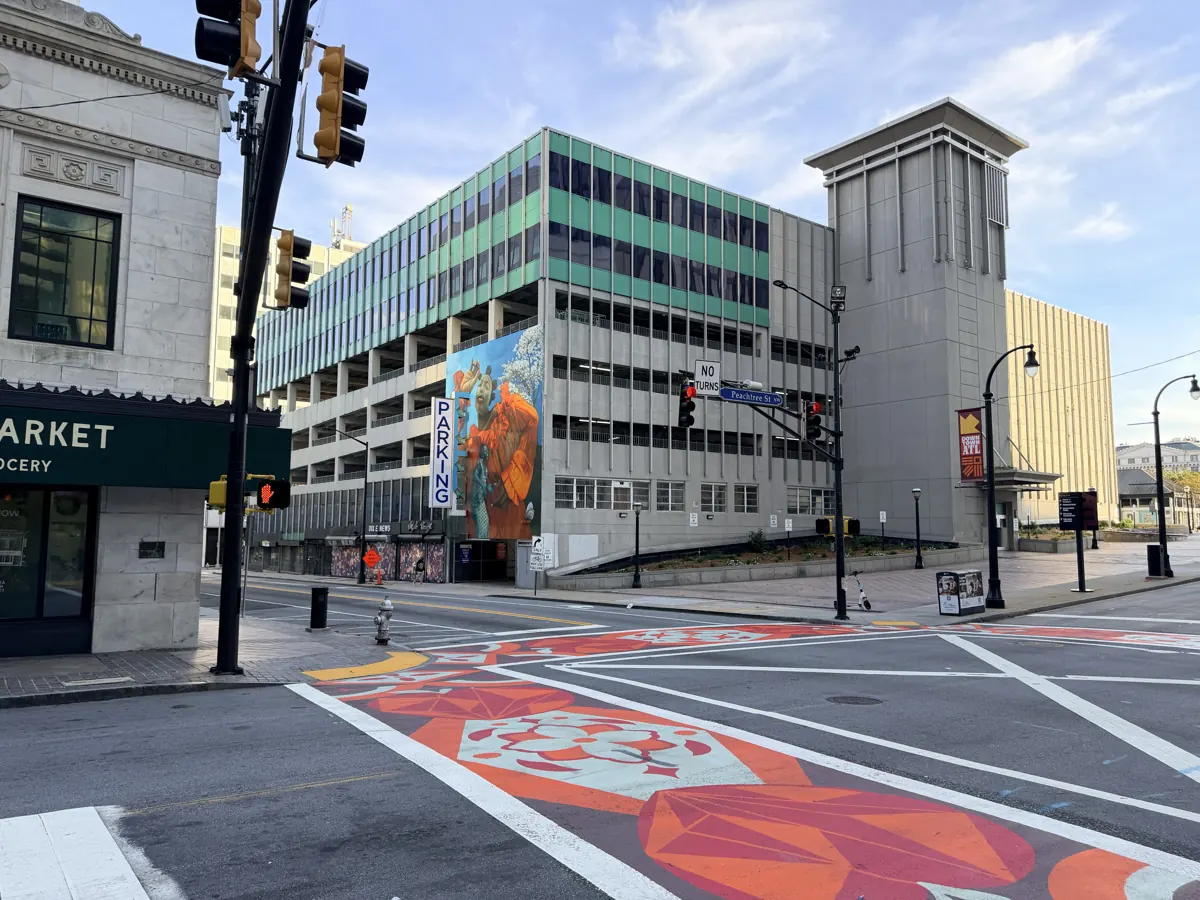
This was the busiest corner in Atlanta. The city's streetcar lines all met a block from here, and Black Atlantans rode them every day. Much of the city around them had been built by Black labor, and little of its wealth had reached them. On the evening of September 22 the mob attacked those passengers first, and before the night ended it had left the bodies of three victims at the base of the Henry Grady statue on this street. By the end of the four days, at least twenty-two more people had been killed elsewhere in the city.
Library of Congress · 1905
About
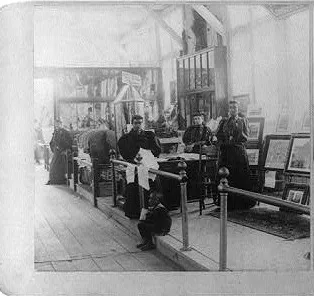
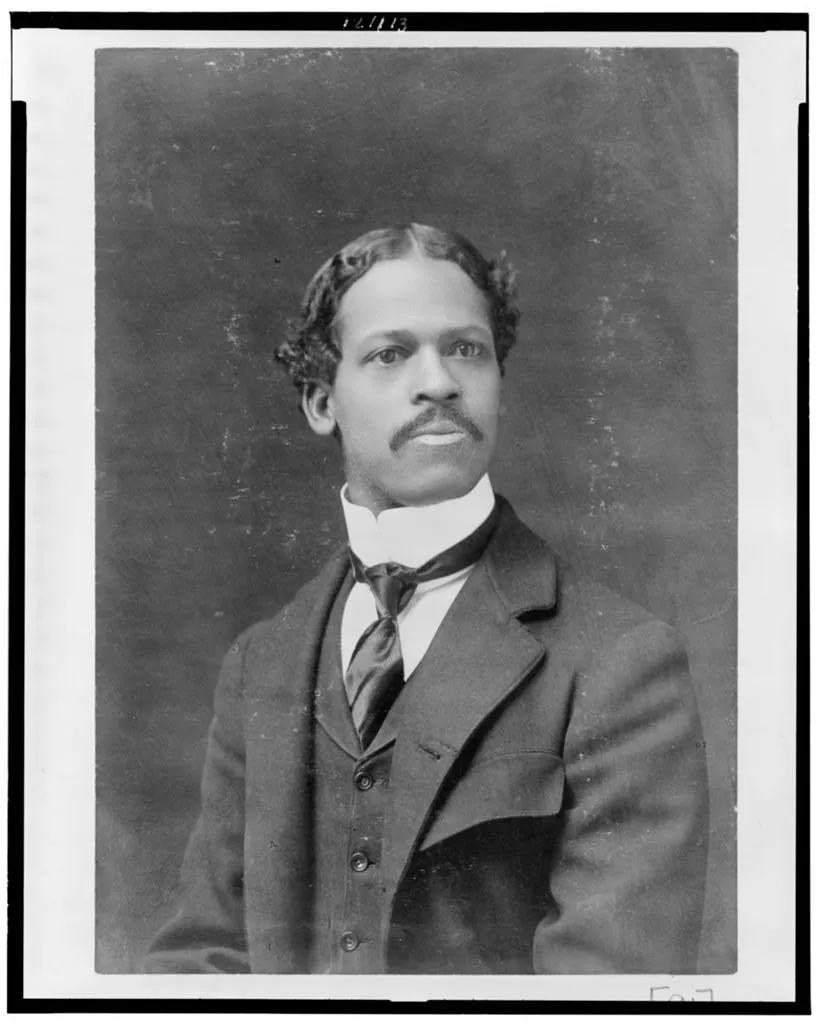
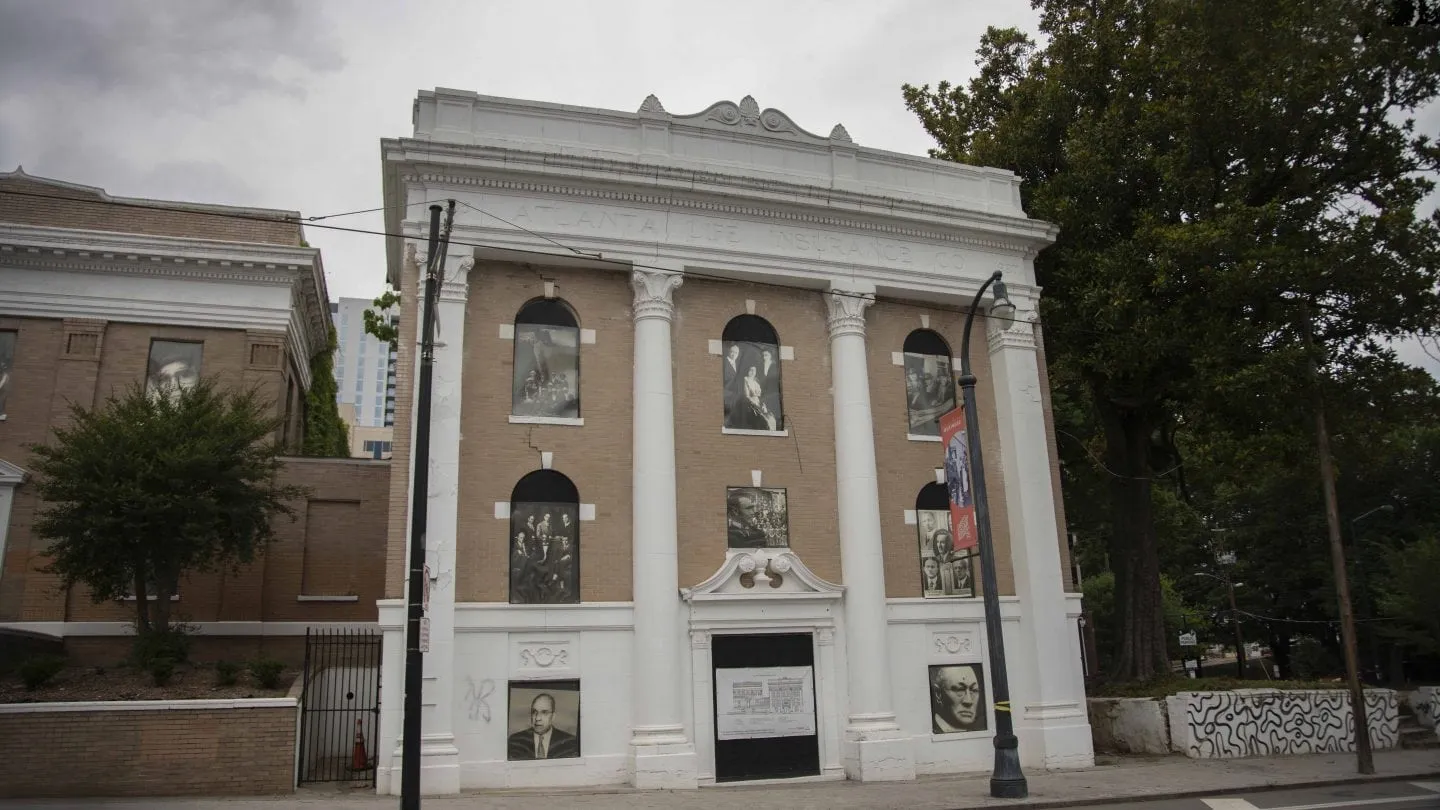
In 1895 Atlanta invited the world to the Cotton States Exposition. On its stage a Black educator offered a bargain: work, build, be patient, and safety will follow.
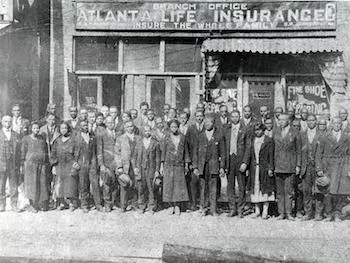
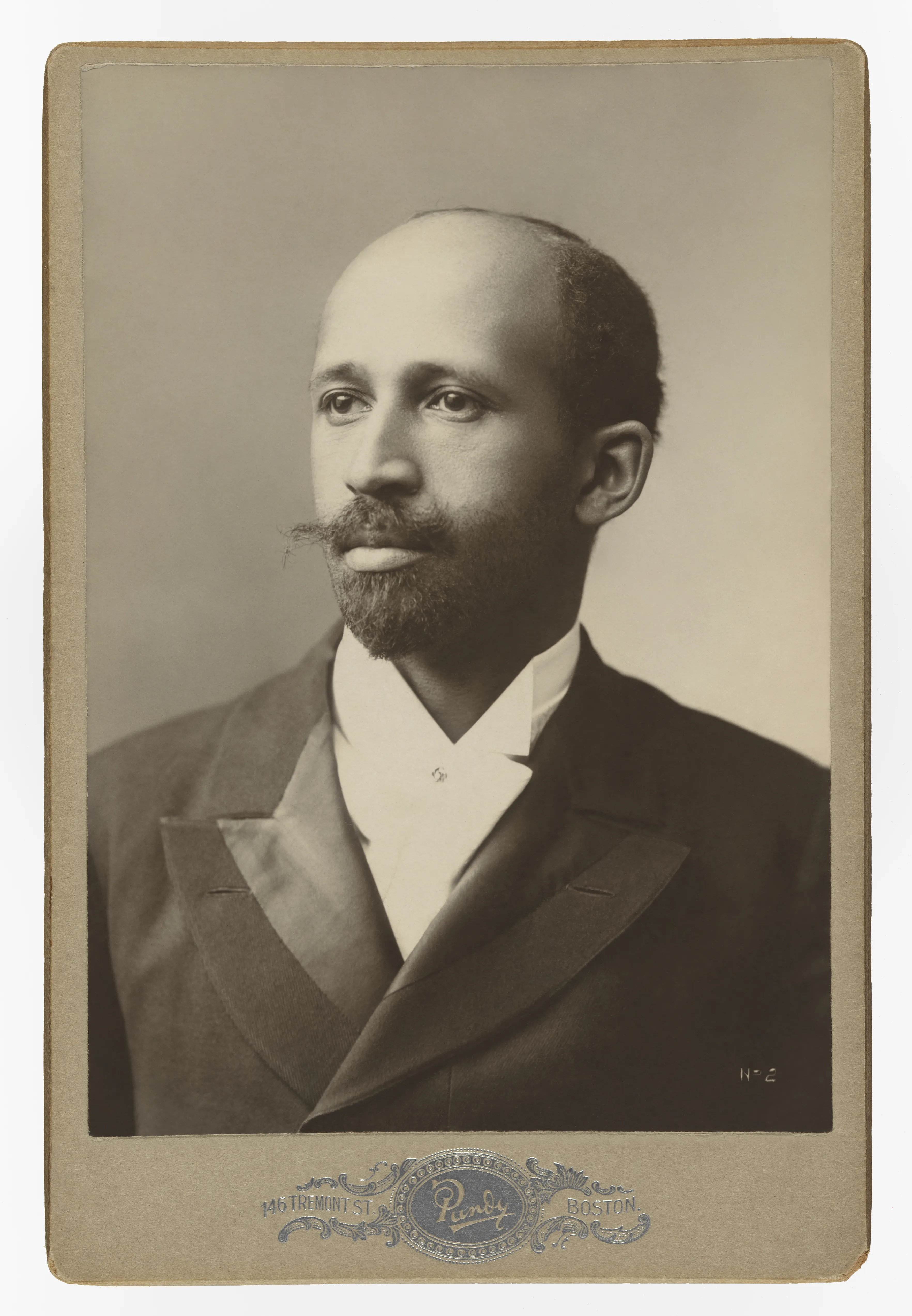
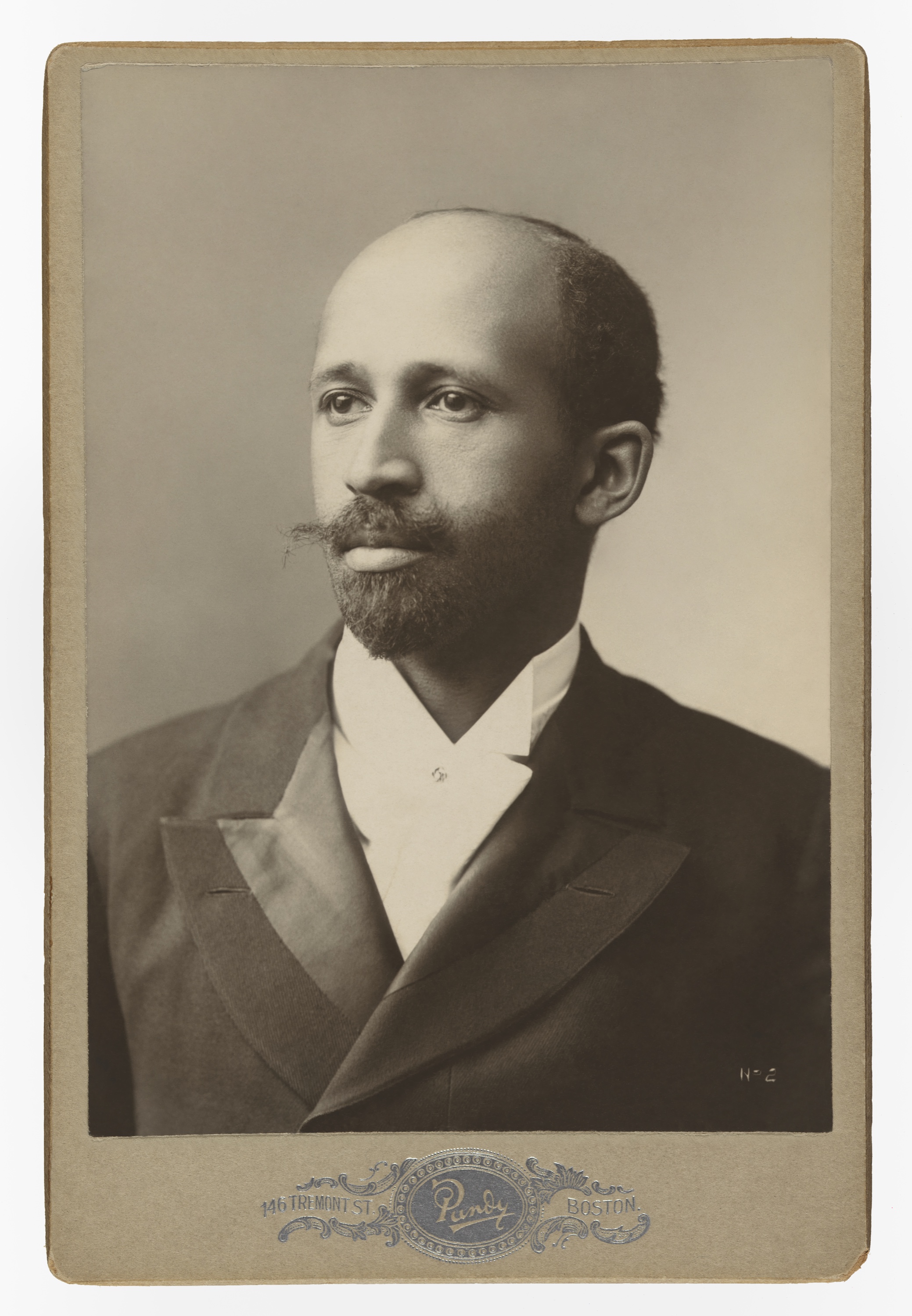
Black Atlanta built. By the turn of the century downtown was a bustling, economically progressive Black district, and when W. E. B. Du Bois went to Paris to show the world what Black America was becoming, he took photographs of its strivers with him.
In September 1906 a white mob answered that prosperity with fire. Over four days neighbors were murdered in Atlanta's streets and Black-owned businesses were burned.
Black Atlanta, betrayed but unbroken, built again.
The Coalition exists to make sure that story is told in full, as a truth to face together rather than a wound to reopen. This is the 120th Year Since 1906, and the beginning of a permanent institution: The First Annual 1906 Remembrance Exposition Week.
Exposition Events
What's On
1906 Atlanta Race Massacre Exposition Campaign · Sunday, September 20 at 10:00 AM to Saturday, September 26 at 2:00 PM · Online
Give to Remember, Give to Restore: Recognizing 120 Years since 1906
This crowdfunding campaign recognizes the 120th year since the 1906 Atlanta Race Massacre. Your gift helps us honor the lives lost, keep the story told in full, and sustain the truth-telling, learning, remembrance, and community action that guide this Exposition.
The First Annual
1906 Remembrance
Exposition Week
Ambassador Andrew Young, Honorary Exposition Chair
A week of truth-telling, learning, remembrance and community action, guided by this year's theme: Truth, Reconciliation, and Action.
- 8
- venues across the city
- 3
- day Mini-Conference
- 5
- days of the History Exhibit
- 12
- events in all
Why an Exposition, Why Now
An Exposition creates witnesses.
It claims public space. It announces that a community's story, evidence and vision matter, and that they will be told every year, permanently, in the city where it happened.
The most powerful Black leaders have always known that speaking truth requires a stage, witnesses and permanent structures. It requires declaration, not plea.
1895
Booker T. Washington used the Cotton States Exposition in Atlanta to declare economic power.
1900
W. E. B. Du Bois came from Atlanta to the Paris Exposition Universelle to demand global recognition.
1903
Du Bois wrote The Souls of Black Folk while teaching at Atlanta University, with a chapter on Washington and another on Atlanta.
1905
Du Bois, then teaching in Atlanta, helped found the Niagara Movement to organize resistance. It fed into the founding of the NAACP four years later.
1906
The response to that progress and that expression. Over four days in September, white mobs attacked Black Atlantans across the city.
2006
The centennial recognition — the first time 1906 was publicly commemorated in the hundred years since. Atlanta’s leaders picked up the legacy torch from Washington and Du Bois.
2026
Atlanta uses the First Annual 1906 Remembrance Exposition Week to declare: this violence will be named, this leadership will be honored, this lineage will continue. Every year. Permanently. Ambassador Andrew Young carries that leadership torch forward as Honorary Exposition Chair of the First Annual 1906 Remembrance Exposition Week.
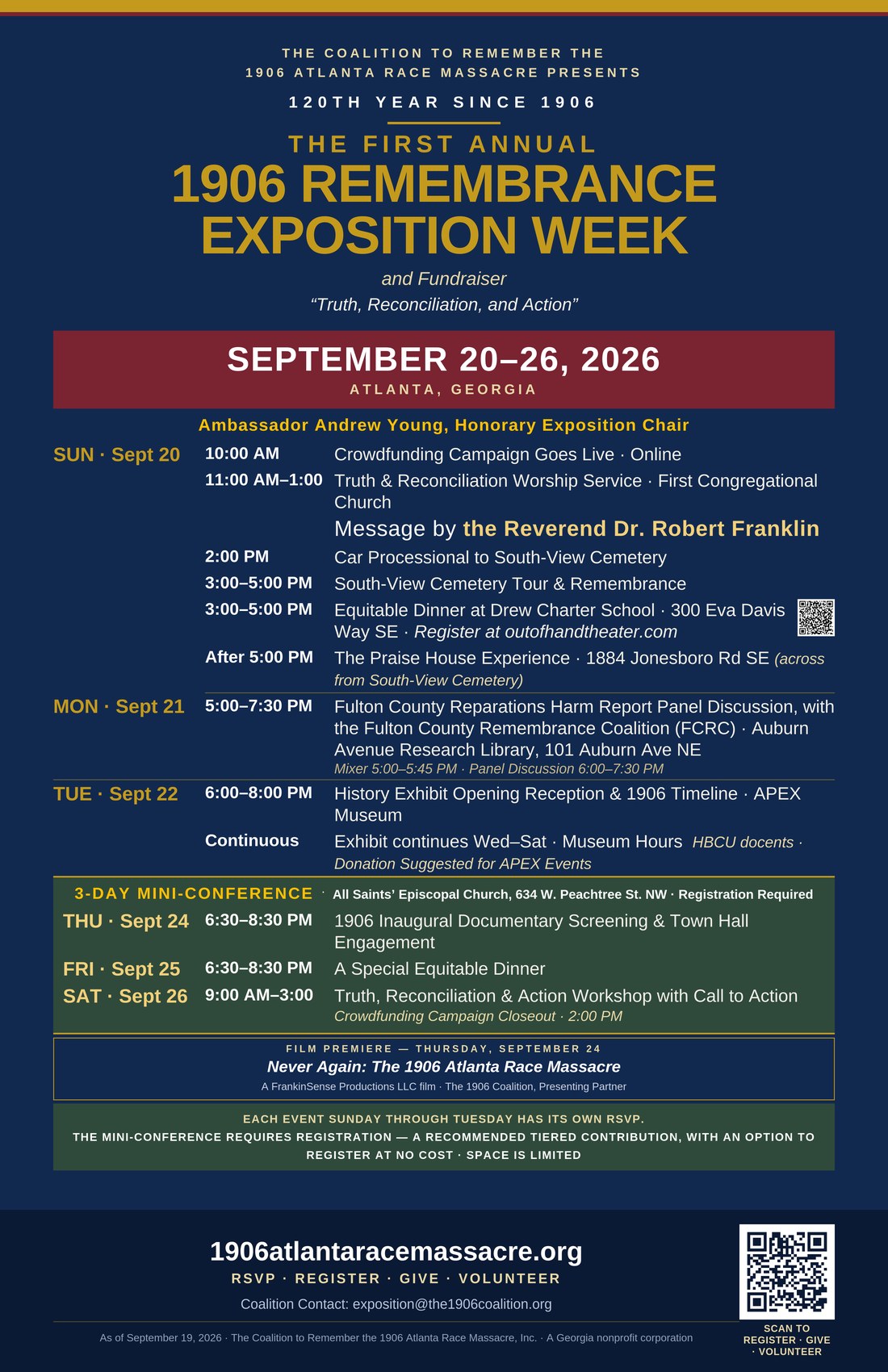
Each event Sunday through Tuesday has its own RSVP. The 3-Day Mini-Conference requires registration, which carries a recommended tiered contribution — one amount for all three days, or separate amounts for individual events — with an option to register at no contribution. The Mini-Conference is the documentary screening and town hall on Thursday, A Special Equitable Dinner on Friday, and the workshop and Call to Action on Saturday; space is limited. The History Exhibit runs at the APEX Museum with HBCU student docents.
RSVP for Sunday to TuesdayRegister for the Mini-ConferenceGiveVolunteerBecome a member
The Schedule
Opening the week · Sunday, September 20 · 11:00 AM to 1:00 PM · First Congregational Church
Message by the Reverend Dr. Robert Franklin, former President of ITC and Morehouse College, at the Truth & Reconciliation Worship Service.
The Massacre
What Happened
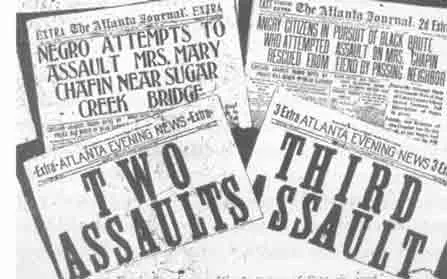
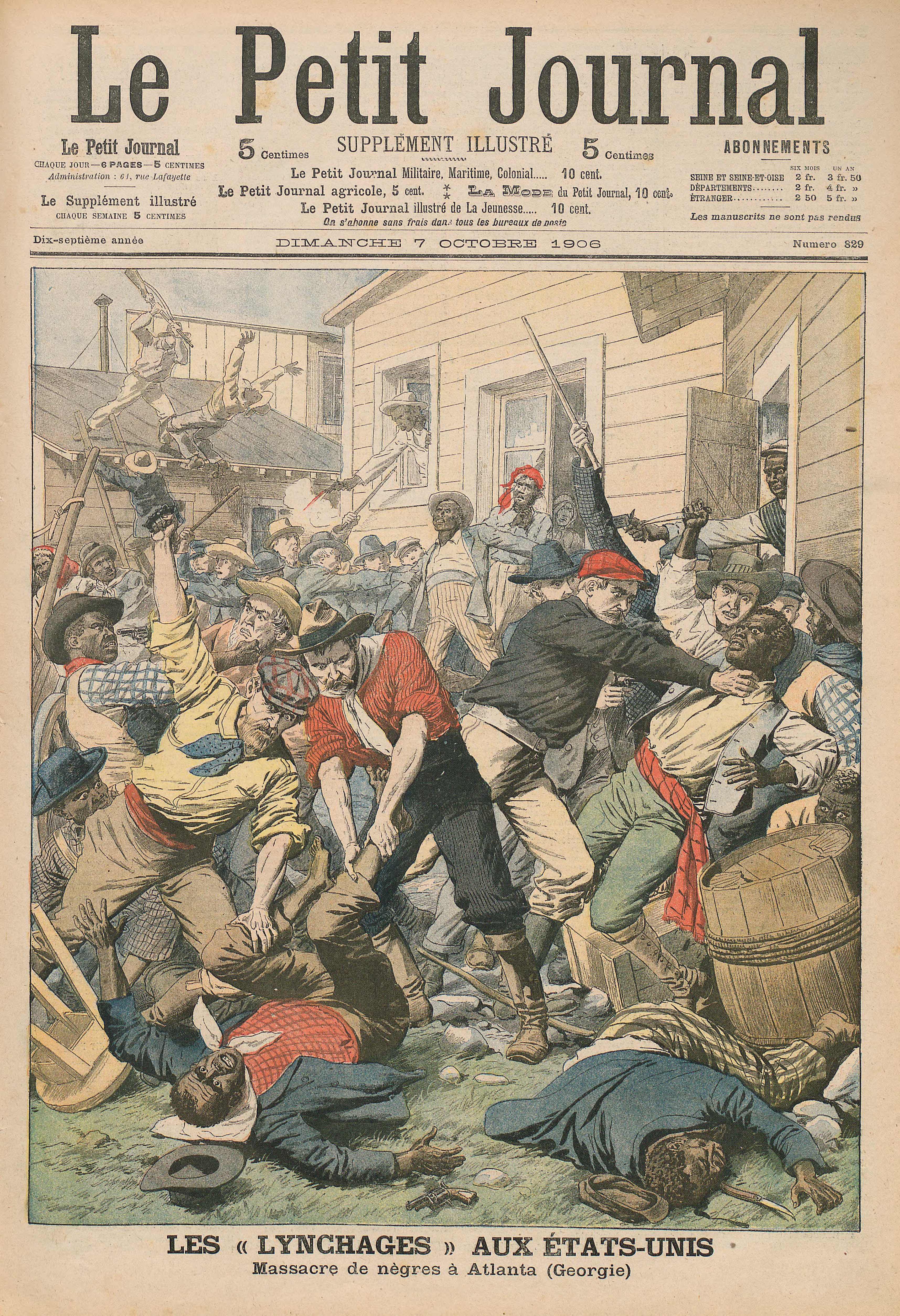
Through the summer of 1906, Atlanta's four white daily papers ran repeated false stories alleging assaults by Black men on white women.
The stories were lurid, exaggerated, or invented outright, and each extra edition outsold the last. The night before the massacre, the Atlanta Evening News asked its readers: “Shall these black devils be permitted to assault and almost kill our women, and go unpunished?” Two of those papers live on today as The Atlanta Journal-Constitution. No apology has ever been made.
By nine that evening, a mob of thousands of white men and boys was attacking Black Atlantans at Five Points.
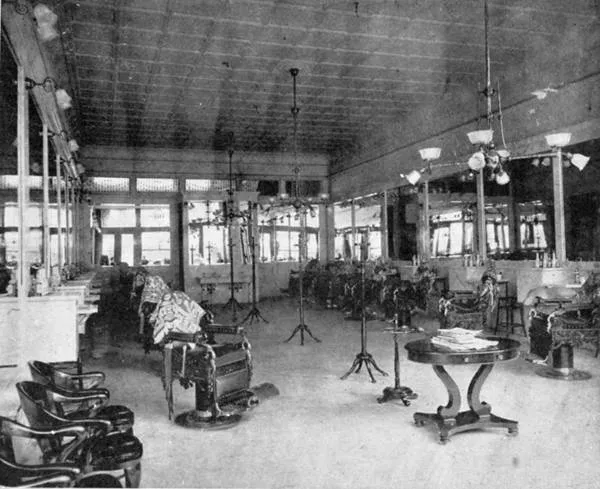
They pulled people from streetcars, dragged Black workers out of hotels and barbershops, and killed at least twenty-five people over four days. Ten to fifteen thousand were in the streets before heavy rain broke the first night at three in the morning.
The Path of Terror
The violence began downtown on the night of Saturday, September 22, and reached Brownsville, on the south side of the city, two days later.
The tour follows that route through twelve places, from First Congregational Church to South-View Cemetery. Read it from anywhere, walk it, or ride it in Sunday's car processional. On the route it uses your phone's location to tell you what happened at each place as you reach it.
Brownsville
Brownsville armed itself.
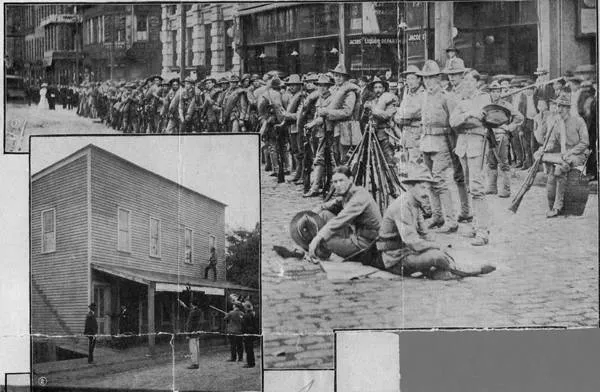
On the massacre's third night, county police and armed white civilians marched into Brownsville, the Black neighborhood around Clark College and Gammon Theological Seminary, expecting to disarm it. The residents fired back. An officer was killed, and the state militia occupied the neighborhood, seized weapons, and arrested more than 250 Black men, including the colleges' professors.
The Death Toll
Those killed were never honestly counted.
- 10
- certificates issued
- City coroner
- 12
- in the official history
- Franklin Garrett, Atlanta and Environs, 1954
- 25
- known killed
- Equal Justice Initiative; Fulton County Remembrance Coalition
- 40
- upper scholarly estimate
- New Georgia Encyclopedia
- 100
- in unofficial reports
- Fulton County Remembrance Coalition
25 Victims
As far as we know
At least twenty-five people were killed in Atlanta between the 22nd and the 25th of September, 1906.
Sixteen of those killed have been identified by name. Nine have not, and researchers are still working to recover them.
Each name opens what the record holds about that person, and what it leaves out. Marshall Carter and Stinson Ferguson were identified in 2023, one hundred and seventeen years after they were killed.
“Red was the midnight; clang, crack and cry of death and fury filled the air and trembled underneath the stars when church spires pointed silently to Thee.”
History
What We Know
What Survives
Only six images related to the massacre are known to survive.
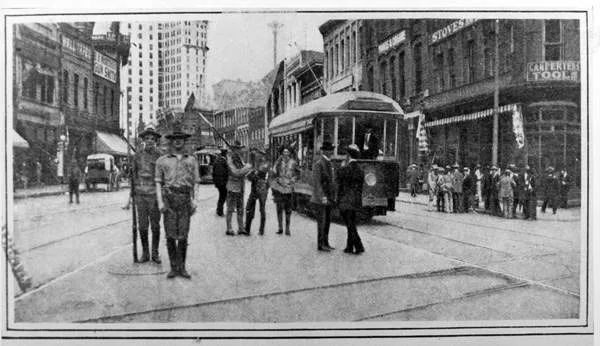
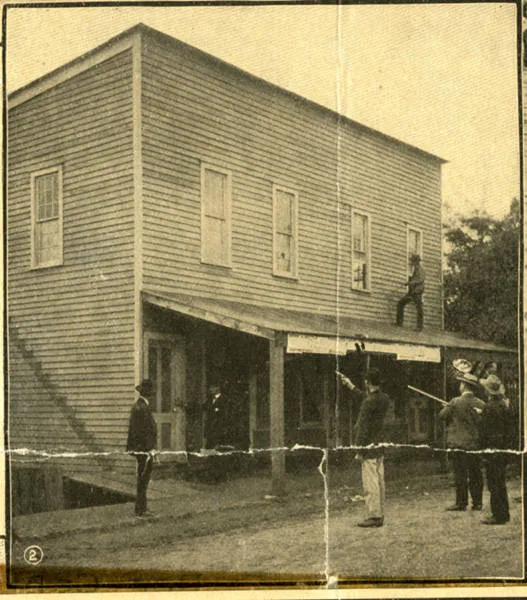
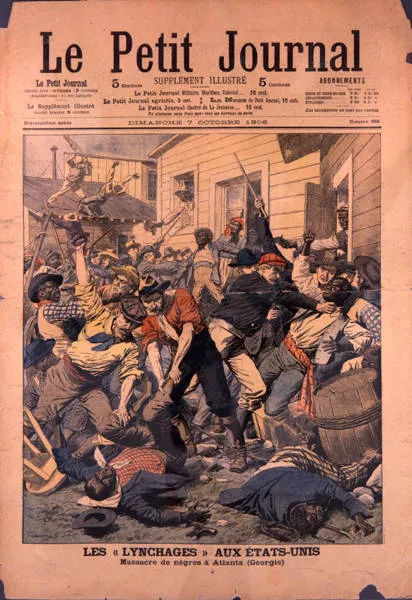
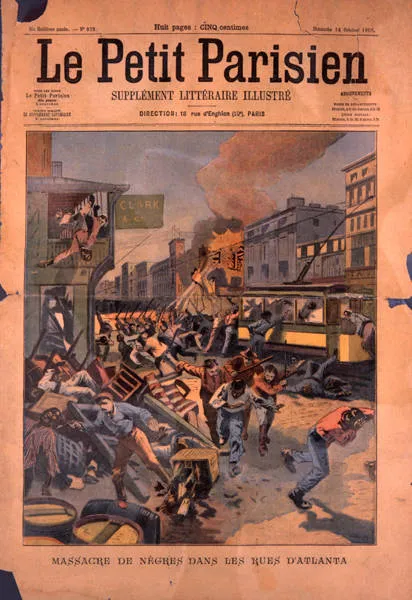
Built on Black Labor
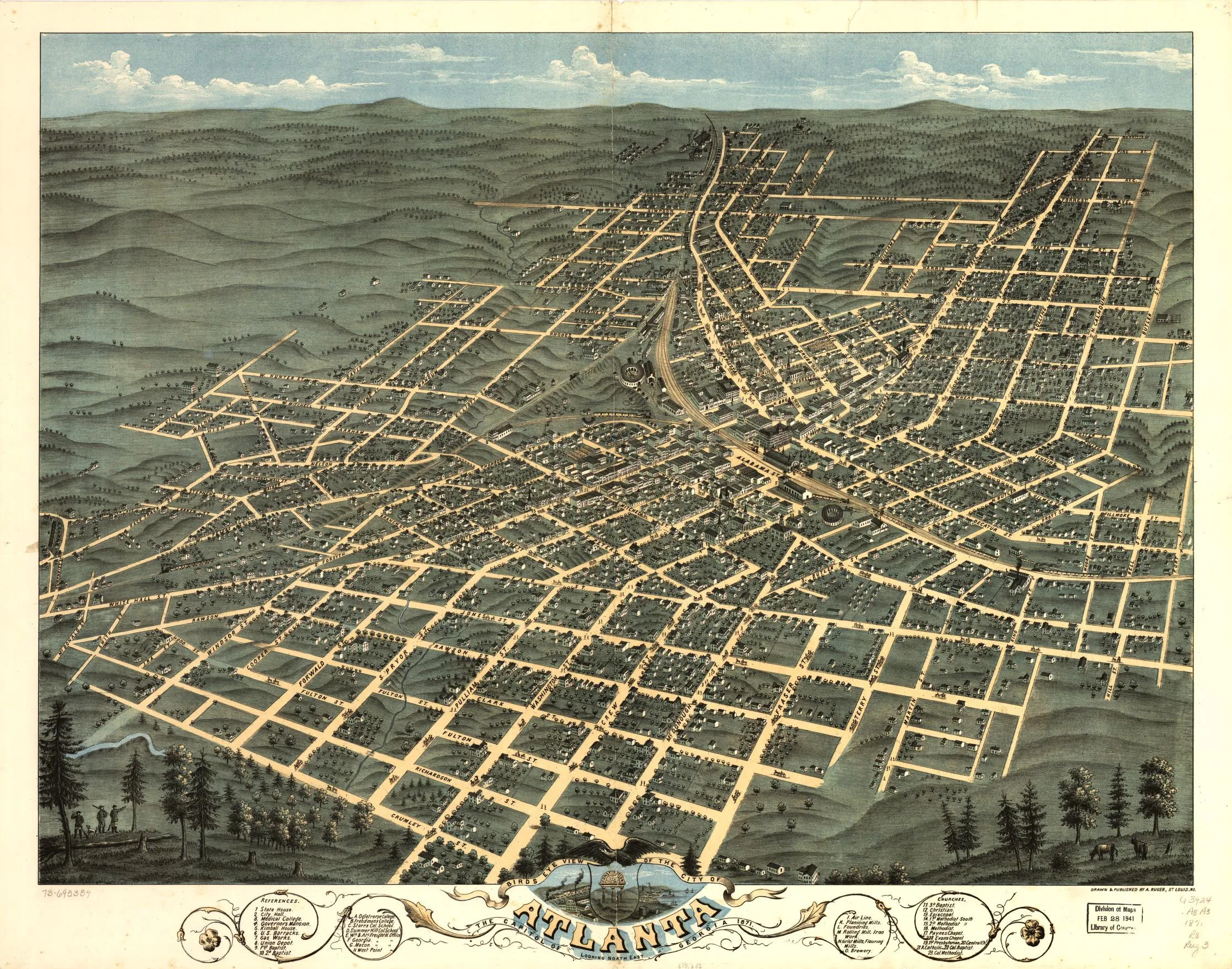
A city built on Black labor.
Atlanta grew from 89,000 people in 1900 to 150,000 by 1910. The Black population grew fastest of all.
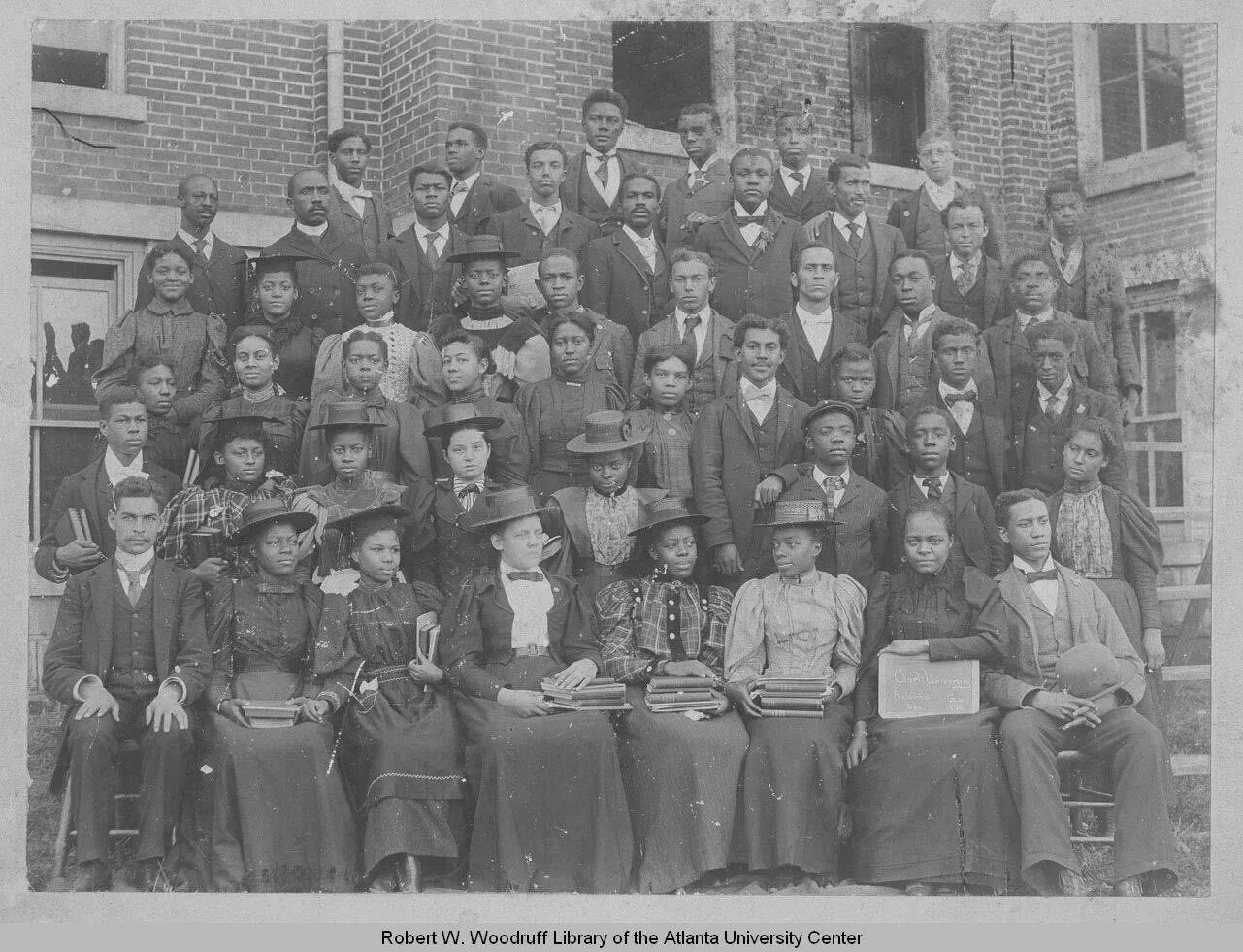
Forty years after Union troops left the city in ruins, Atlanta had rebuilt itself as the railroad hub of the South, and Black Atlantans had built much of it. They also built their own city inside it: six colleges, churches, newspapers, insurance companies, groceries, pharmacies and barbershops.
Then two men ran for governor, and both promised to stop Black Georgians voting at all.
Hoke Smith had published the Atlanta Journal. He campaigned to add literacy tests and property requirements to the state constitution, written so that they would disqualify Black voters and spare poor white ones, and he won the primary in August 1906, a month before the massacre. Clark Howell owned the Atlanta Constitution and ran against him, arguing that the poll tax and the white primary already kept Black Georgians from the ballot. Each man had a newspaper at his disposal, and through that summer both used it to frighten white readers about their Black neighbors and to sell papers doing it.
Silence
A century of silence.
Franklin Garrett, Atlanta's official historian, gave the massacre five pages in his 2,072-page history of the city, and repeated the finding that twelve people had died.
Historians left it largely alone until the civil rights era, and it reached a wide audience only at the turn of this century, when four books appeared in five years. On the centennial in 2006 a coalition of academics and activists organized a year of programs, beginning with a funeral motorcade and a memorial at George Union Wilder's grave. In 2007 the massacre entered Georgia's public school curriculum.
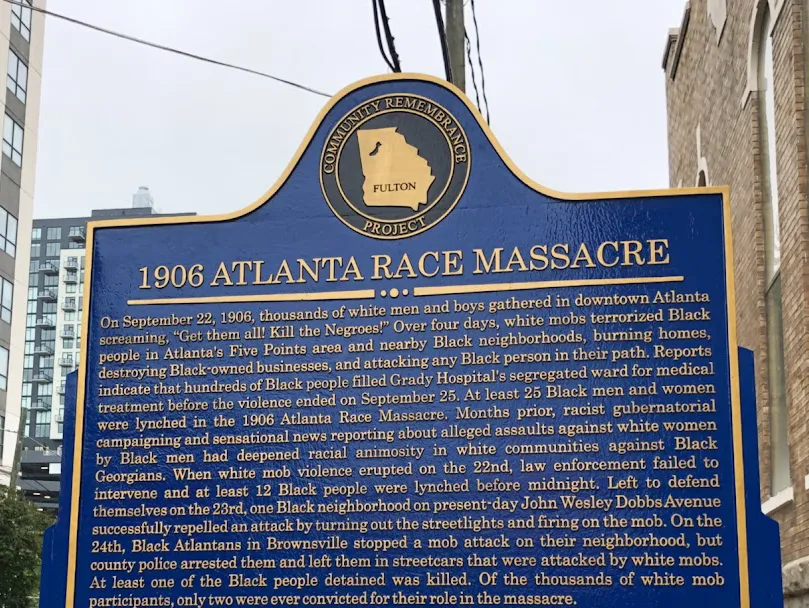
In 2019, community members collected soil from the sites where people were killed. In 2022, three historical markers were dedicated. In 2023, researchers found the death certificates of Marshall Carter, aged thirteen, and Stinson Ferguson, aged twenty-five, and added two more names to the count. In 2025 a mural went up in Brownsville, and was revised after the community said it had not been consulted.
The name changed too. For most of a century this was called the Atlanta Race Riot, a phrase that puts Black Atlantans in the street starting the violence. They were the ones attacked, in their workplaces, on streetcars and at home, by white mobs the city let run for four days.
Learn More
Our tour · Twelve places · Read it, walk it or ride it
The 1906 Path of Mob Violence
The places where it happened, in order, from First Congregational Church to South-View Cemetery, each with its history, photographs and sources. Read it from anywhere. On the route, it uses your phone's location to tell you what happened at each place as you reach it.
Take the tour
This history is free to learn, and free to teach.
The 1906 Atlanta Race Massacre has been part of Georgia's social studies curriculum since 2007. NCCHR has built free classroom tools around it, and this site keeps its own sources open to everyone.
01
The NCCHR Learning PortalFree classroom resources from NCCHR, with four lesson plans built on 1906:
02
Reconstructing AtlantaNCCHR's virtual exhibition on the massacre and the city that rebuilt after it, open to visit from anywhere.
03
1906 Atlanta ARAn augmented-reality app that puts the history on the streets where it happened. Free for iPhone and iPad, from the App Store. On a computer, scan the code with your phone to open it.
App Store 04
Veiled Visions walking tourA self-guided tour of the downtown sites, built at Georgia State University. Walk it in person or follow it from home.
05
For teachersThis site's own classroom page: primary sources in the public domain, discussion questions, and how to take a class to the sites.
06
The sourcesEvery claim on this site traces to a numbered source. The bibliography, the archives, and where the record disagrees with itself.
Documentary Short
A Short Telling of the Story
Never Again
“Never Again Will Terror Prevail, Always Again Will The Resilient Arise!”
Never Again: The 1906 Atlanta Race Massacre was directed by Rev. Trent Frank for FrankinSense Productions LLC. It sets 1906 among the other American cities where white mobs attacked Black neighborhoods. It is also, in the filmmakers' words, a story of Black resilient leadership, resistance, racial reconciliation, coalition building, and societal change.
The Inaugural Documentary Screening is on Thursday, September 24 at All Saints' Episcopal Church, and it opens the three-day Mini-Conference. The Coalition presents the film. FrankinSense Productions and the Coalition are separate organizations.

The Coalition
Getting the Story Told
We don't own the story.
We make sure it's told. The Coalition carries forward work that began on the centennial in 2006, when a group of academics and activists organized a year of programs about an event Atlanta had spent most of a century not discussing.
Vision & Mission
Vision
To activate community memory toward fostering racial reconciliation, systemic restoration, and community preservation, in order to inspire rising through resilience, so that Atlanta becomes a city where equity and justice truly prevail, and where the ravages of racial disparities and hatred are relics of the past.
Mission
The Coalition promotes the four abiding actions of Remembering, Reconciling, Restoring, and Resisting by partnering with member organizations and the community to facilitate in six spheres — Remembrance Events, Scholarly Engagement, Community Commerce Building, Community Dialogue, Civic Empowerment, and Arts & Cultural Expression — to present the historical truths about the devastating and long-term traumatic effects of racial atrocities against African Americans, as typified by the 1906 Atlanta Race Massacre, and to contend with these historical truths and the current realities of racial injustice in Georgia.
Bridge
The Coalition carries out its Mission primarily through the First Annual 1906 Remembrance Exposition Week — its permanent platform for facilitation — and, as development dictates, through complementary programming throughout the year.
What We Hold To
01
We are a facilitator, not a program operator — we convene and enable member organizations rather than run programs ourselves.
02
Our framework is the Four Rs: Remember, Reconcile, Restore, Resist.
03
We name a recurring pattern of building and dispossession — “Built, Pillaged, Built, Pillaged, Built” — 1906 as an instance in a longer arc, not an aberration.
04
The Exposition is a permanent annual institution, not a one-time event.
05
Our posture is proactive and restorative: truth first, then reconciliation, then action.
Coalition Leadership
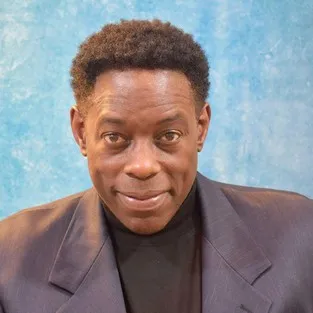
Rev. Trent Frank
Board President
Overall Planning & Film Screening · Founding Co-Convener
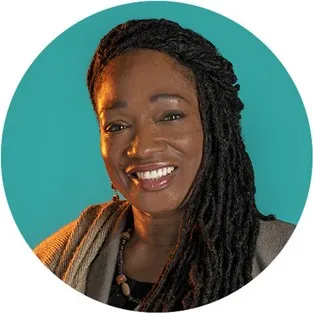
Dr. Clarissa Myrick-Harris White
Board Vice President
Partnerships · History Exhibit & Exposition Digital Collection
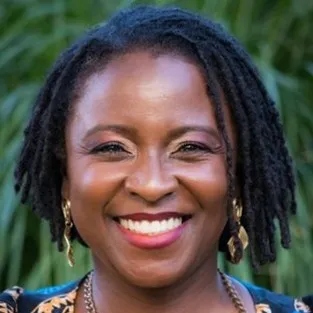
Ms. Adria Kitchens
Board Treasurer
Co-Director, Exposition Mini-Conference · Equitable Dinner
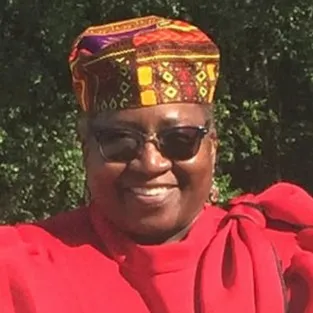
Ms. Sharron Paige-Whitaker
Board Secretary
Future Awards Programs
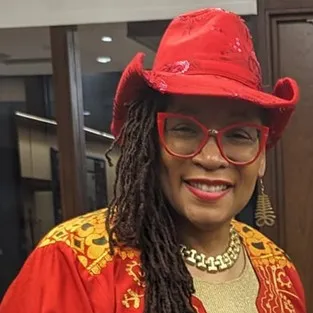
Dr. R. Candy Tate
Chair, Standing Committee for the 1906 Remembrance Exposition
Partnerships & Website · Founding Co-Convener, Former Board President
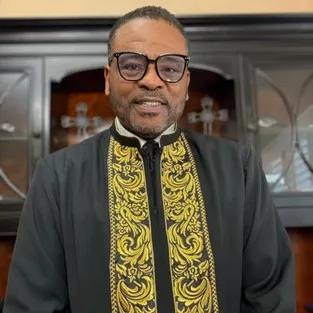
Rev. Dr. Brendan A. Jenkins
Vice-Chair, Standing Committee for the 1906 Remembrance Exposition
Co-Director, Exposition Mini-Conference · Community Commerce Building
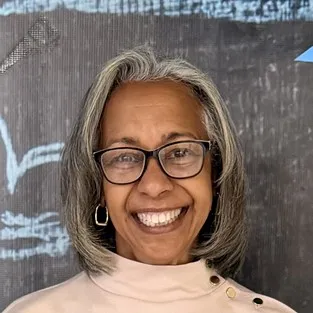
Ms. Winifred Hemphill, JD
Board Member
Memorial History · South-View Cemetery Association
Coalition Archives
The programs from earlier years of remembrance, and the sources this site is built on.
Archives and past yearsEngage with the workSourcesThe deeper history
Collaborators
Leading the Way
These organizations make the week possible by sharing what they steward.
In addition to offering their counsel and leadership, they are opening their venues — sacred and civic spaces — mounting the exhibits, convening the panels, hosting the dinners, and grounding it all in scholarship and art.
 APEX Museum
African American Panoramic Experience. Host of the 2026 History Exhibit.
 Auburn Avenue Research Library
The Auburn Avenue Research Library on African American Culture and History (AARL). Host of Monday's Fulton County Reparations Harm Report Panel Discussion.
 The Black Scholar
The journal of Black studies and research, founded in 1969. Collaborator on the 1906 History Exhibit and its opening at the APEX Museum.
 First Congregational Church
Host of the Truth & Reconciliation Worship Service opening the week. Led in 1906 by Henry Hugh Proctor.
 All Saints' Episcopal Church
Host venue for the three-day Mini-Conference: the inaugural documentary screening, A Special Equitable Dinner and the closing workshop.
 Culture Centers International
Organizing host of the Coalition.
 Morehouse College
HBCU collaborator. Student docents for the History Exhibit; home of the Black Men's Research Institute.
 Out of Hand Dinners
Citywide guided conversations based on Out of Hand's award winning Equitable Dinners model, pairing art with a shared meal. Host of Friday's A Special Equitable Dinner.
 FrankinSense Productions LLC
Producer of Never Again: The 1906 Atlanta Race Massacre, the short documentary that has its inaugural documentary screening on Thursday, presented by the 1906 Coalition. A separate organization from the Coalition.
 Praise House Project
Artist Charmaine Minniefield’s memorial project at South-View Cemetery.
 National Center for Civil and Human Rights
Its Truth and Transformation Initiative identified two previously uncounted victims in 2023. Its Learning Portal carries free 1906 lesson plans and classroom resources.
 Afro-American Historical and Genealogical Society, Metro Atlanta Chapter
AAHGS Metro Atlanta: family-tree researchers sharing the history and genealogy of African Americans, with roots in Georgia and beyond.
 Fulton County Remembrance Coalition
Soil collection and the three historical markers dedicated in 2022.
 Fulton County Reparations Task Force
The county body whose Harm Report documents the harms done to Black Fulton County residents under slavery and Jim Crow.
 STAR, Southern Truth and Reconciliation
 South-View Cemetery
Burial place of at least eight victims, including George Union Wilder.
 ASALH
ASALHAssociation for the Study of African American Life and History.
Press
In the News
The Press Room
The First Annual 1906 Remembrance Exposition Week — Press Materials
The First Annual 1906 Remembrance Exposition Week runs September 20-26, 2026, at venues across Atlanta, under the theme Truth, Reconciliation, and Action. It marks the 120th year since the 1906 Atlanta Race Massacre, when white mobs killed at least 25 Black Atlantans over four days and no one was brought to justice. The Coalition has built the week to return every September as a permanent annual institution. Ambassador Andrew Young serves as Honorary Exposition Chair.
Press contact
exposition@the1906coalition.org
Coalition leadership is available for interview. Print-resolution files and event photography are available on request; captions and credit lines run as supplied.
Historical images · free to publish, with the credit shown
The week at a glance
Sun · Sep 20
- 10 AM Crowdfunding Campaign Goes Live · Online
- 11 AM-1 PM Truth & Reconciliation Worship Service · First Congregational Church
- 2 PM Car Processional to South-View Cemetery · Departs First Congregational Church
- 3 PM-5 PM Equitable Dinner at Drew Charter School · Drew Charter School, Yates Campus
- 3 PM-5 PM South-View Cemetery Tour & Remembrance · South-View Cemetery
- 5 PM The Praise House Experience · 1884 Jonesboro Rd SE, across from South-View Cemetery
Mon · Sep 21
- 5 PM-7:30 PM Fulton County Reparations Harm Report Panel Discussion · Auburn Avenue Research Library
Tue · Sep 22
- 6 PM-8 PM History Exhibit Opening Reception & 1906 Timeline Presentation · APEX Museum
- Tue-Sat The 1906 History Exhibit · APEX Museum
Thu · Sep 24
- 6:30 PM-8:30 PM 1906 Inaugural Documentary Screening & Town Hall Engagement · All Saints' Episcopal Church
Fri · Sep 25
- 6:30 PM-8:30 PM A Special Equitable Dinner · All Saints' Episcopal Church
Sat · Sep 26
- 9 AM-3 PM Truth, Reconciliation & Action Workshop with Call to Action · All Saints' Episcopal Church
In the News
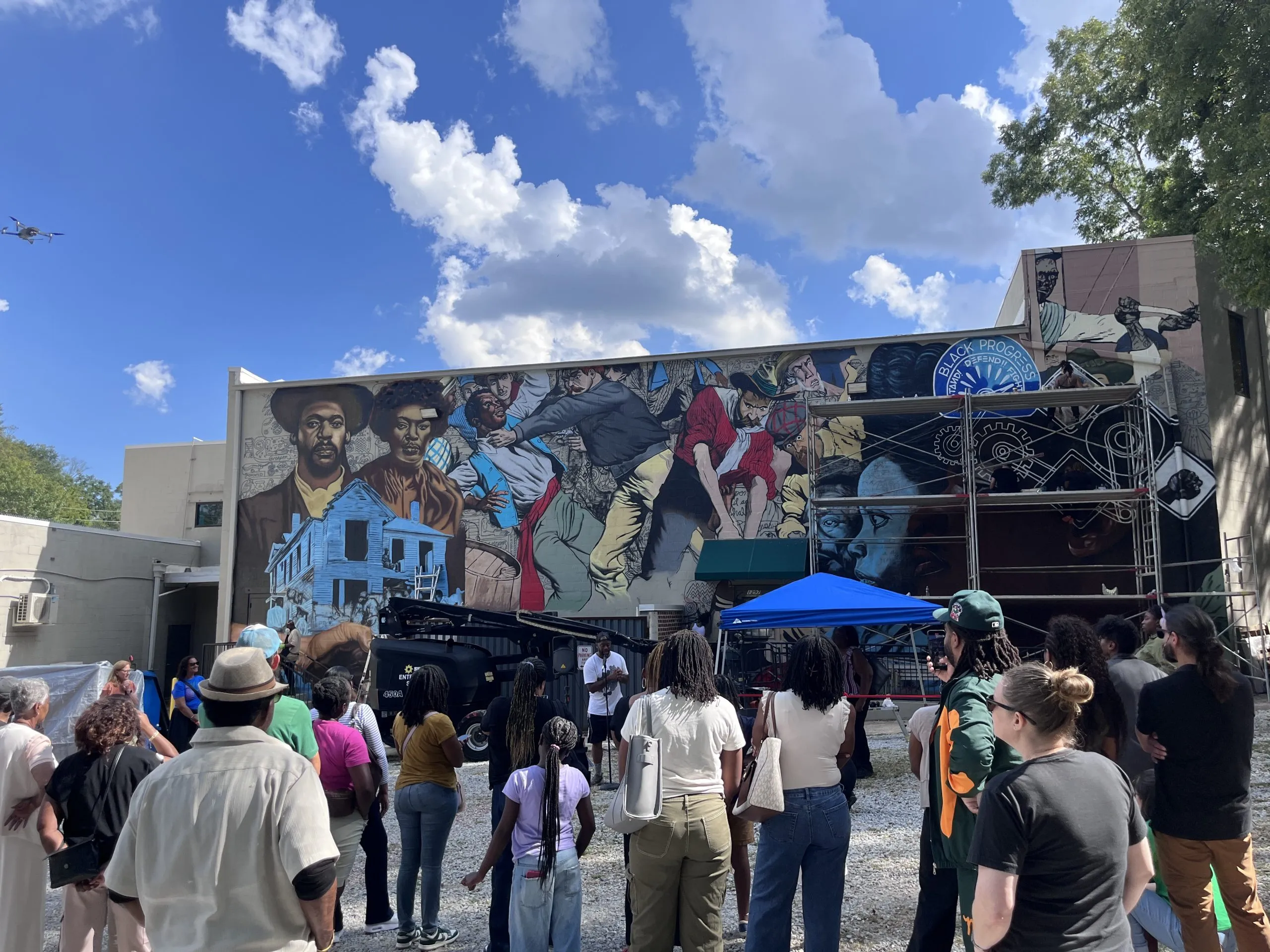
Rough Draft Atlanta · October 2025
Fabian Williams's mural commemorates the 1906 Atlanta Race Massacre
The mural has been revised in response to community feedback.
Capital B Atlanta · September 2025
The 1906 massacre stole Black lives where downtown condos now stand
Rough Draft Atlanta · September 2024
Local events commemorate the massacre's anniversary
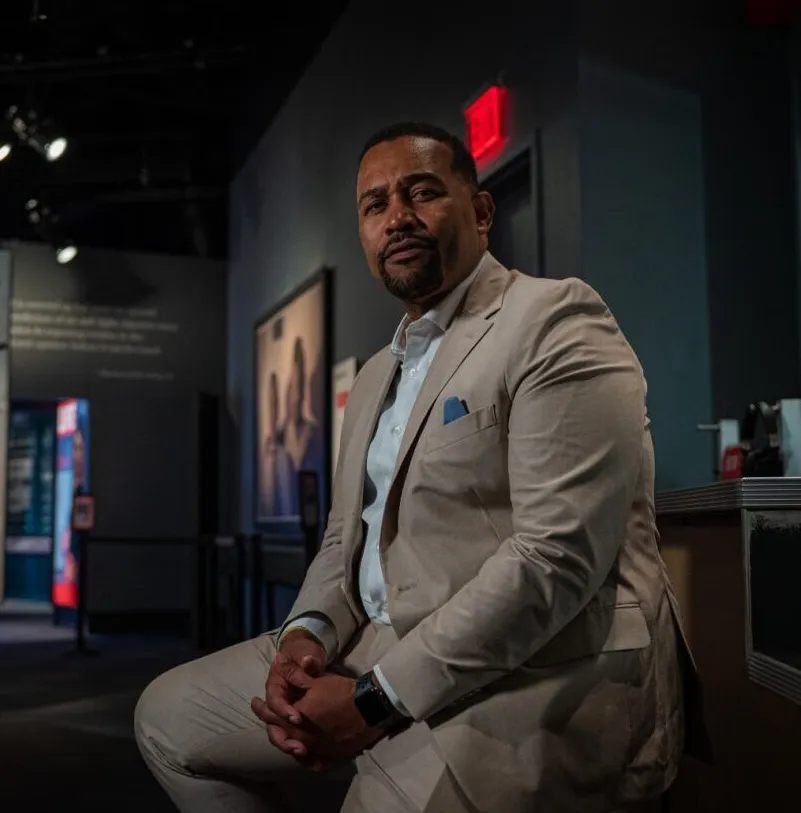
WABE-TV · October 2023
New documentary uncovering the 1906 Atlanta Race Massacre premieres
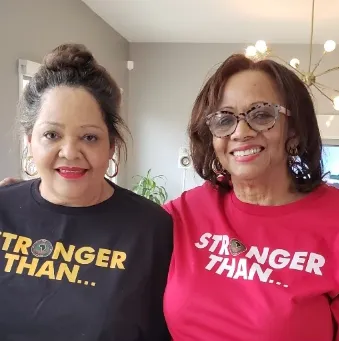
WABE · October 2023
Family reflects on grandfather's legacy after the 1906 Atlanta Race Massacre
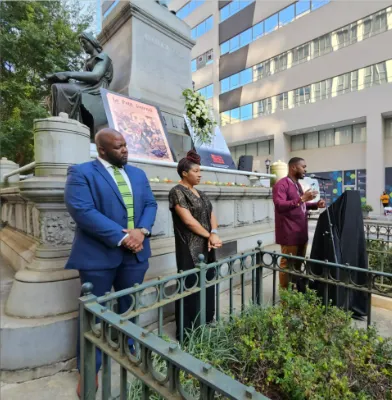
Axios Atlanta · September 2023
Ceremony acknowledges new victims identified in the massacre
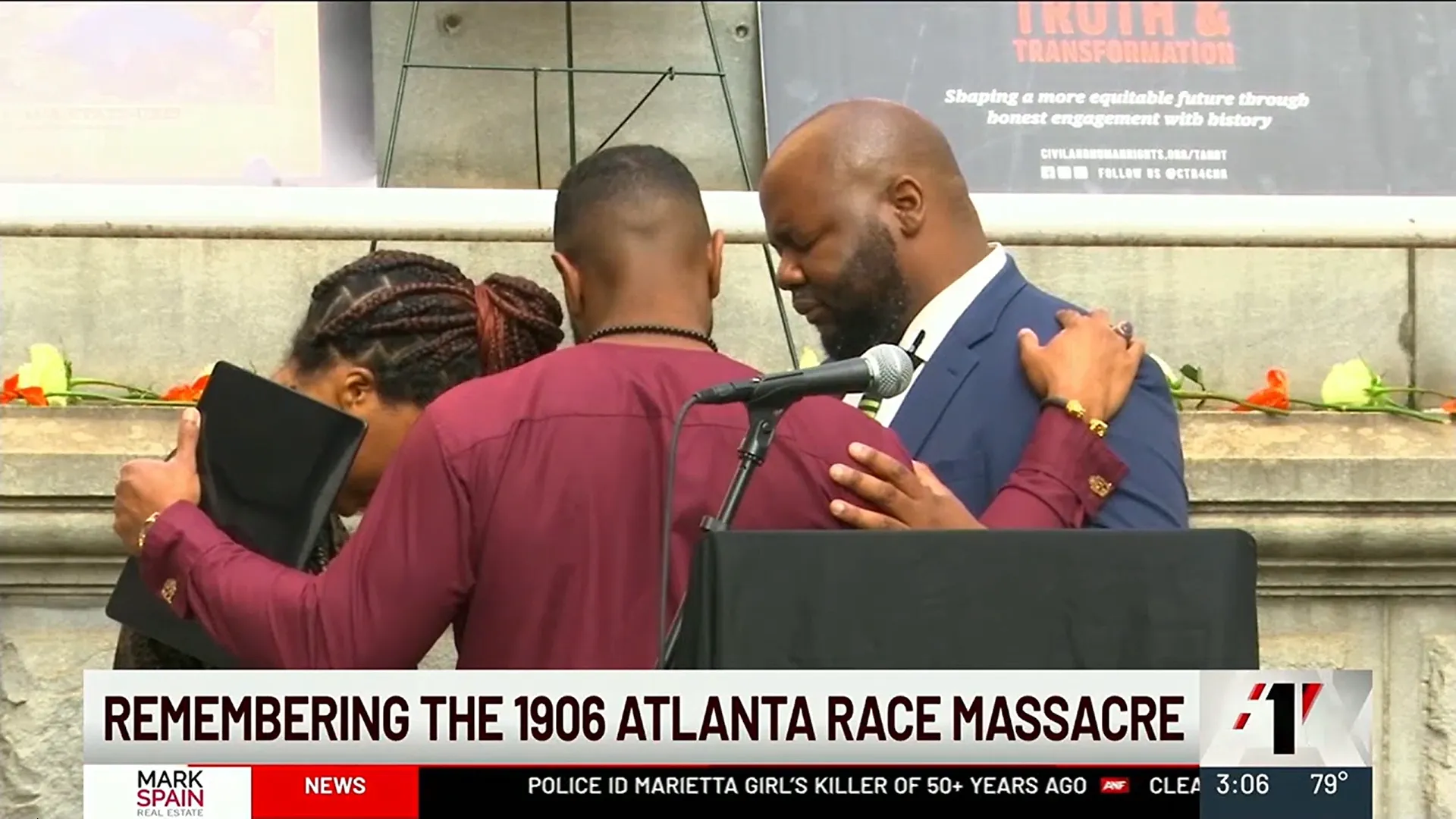
Atlanta News First · September 2023
Vigil held to remember the victims of the massacre
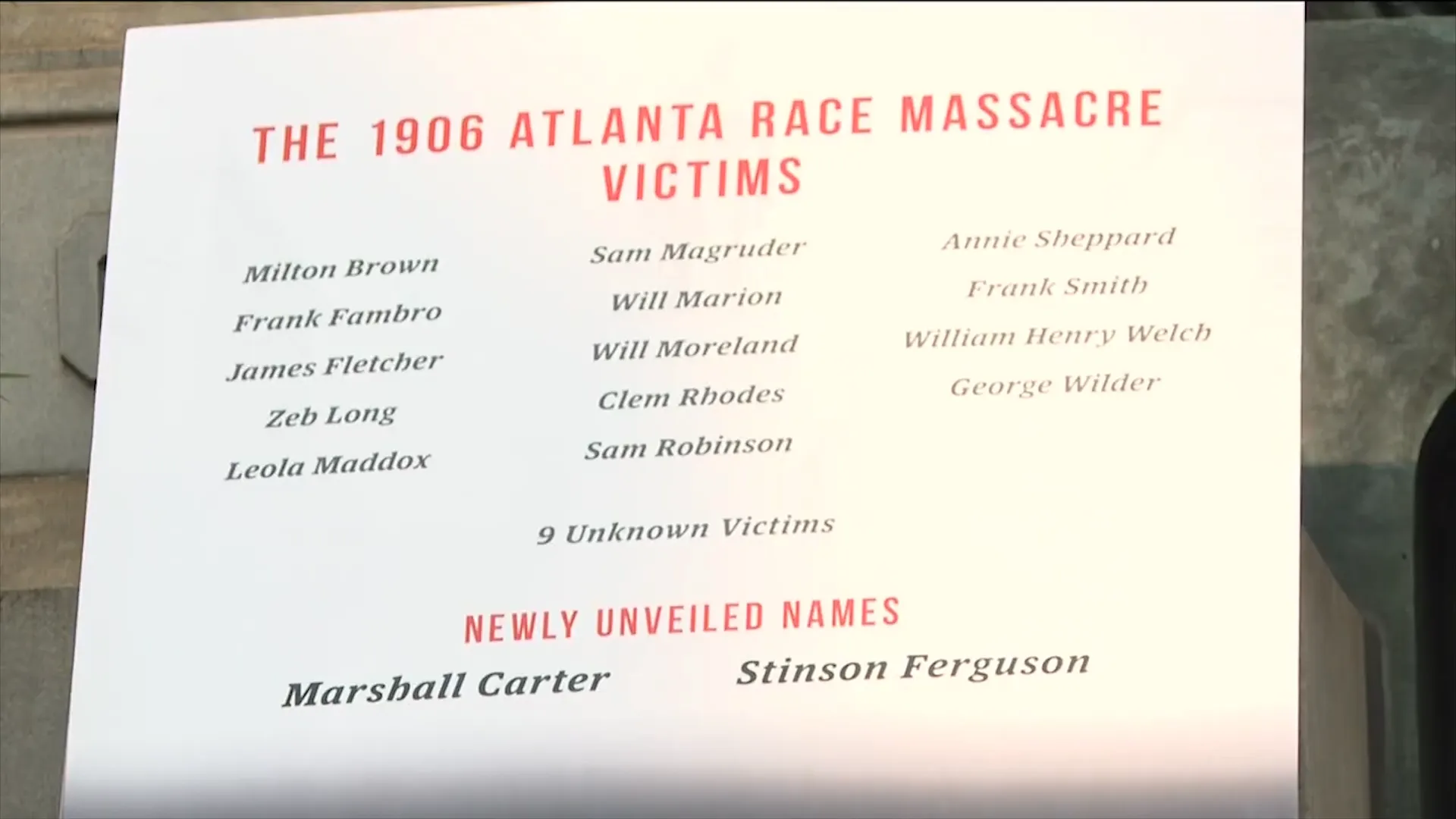
11Alive · September 2023
Two new 1906 Atlanta Race Massacre victims identified
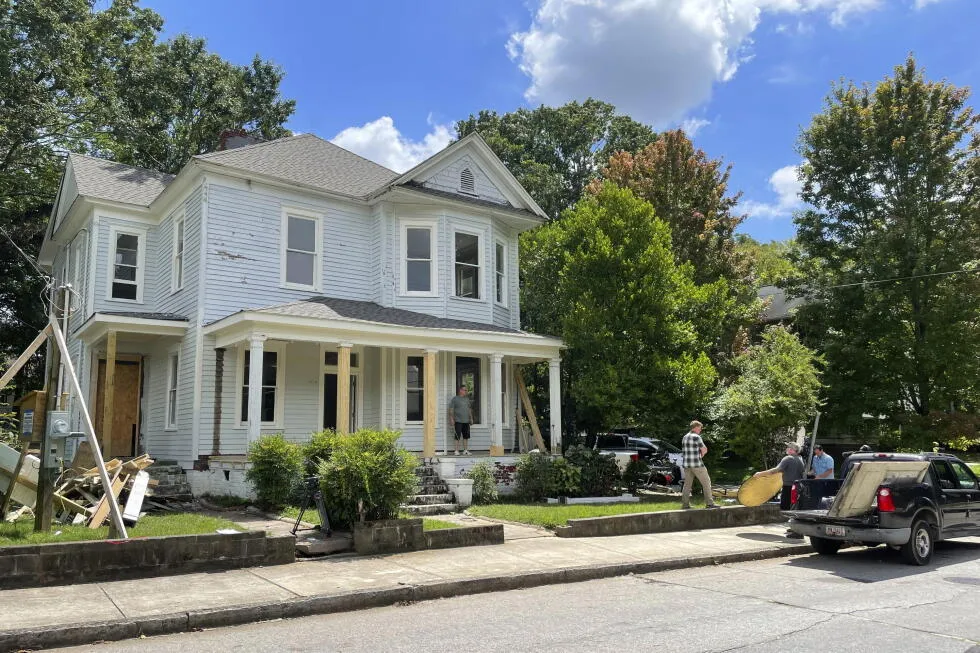
Associated Press · September 2022
Restoration honors Luther Judson Price, the Black postmaster accused of arming Brownsville
Engage
You Make It Happen
Remember. Reconcile. Restore. Resist.
Zeffy charges nonprofits no platform or processing fee, so every dollar of a gift reaches the work. Donations are tax-deductible upon 501(c)(3) approval.
1906 Atlanta Race Massacre Exposition Campaign · Sunday, September 20 at 10:00 AM to Saturday, September 26 at 2:00 PM · Online
Give to Remember, Give to Restore: Recognizing 120 Years since 1906
This crowdfunding campaign recognizes the 120th year since the 1906 Atlanta Race Massacre. Your gift helps us honor the lives lost, keep the story told in full, and sustain the truth-telling, learning, remembrance, and community action that guide this Exposition.
We would be grateful for your support at every level. Every gift helps make you part of Truth, Reconciliation, and Action.
Community events · Sunday, September 20 to Tuesday, September 22 · Free
Each event Sunday through Tuesday has its own RSVP; the Mini-Conference requires registration, with a recommended tiered contribution and an option to register at no cost.
6 Ways to Make a Difference
01
Register
The 3-Day Mini-Conference is the inaugural documentary screening, A Special Equitable Dinner and the closing workshop. It requires registration, with a recommended tiered contribution and an option to register at no cost. Space is limited.
02
Give
The crowdfunding campaign runs September 20 to 26. You can also give to the Coalition at any time of year. All proceeds from the Never Again shirts go to the Coalition too.
03
Become a member
Inaugural members fund the Exposition past its first year and make it something Atlanta can count on every September.
04
Volunteer
Ushers and event support at seven of the week's events. Pick a shift and sign up on Hands On Atlanta.
05
Sponsor
Sponsorships fund the Exposition Week’s lectures, exhibit and guided dialogues, and put your organization’s name beside the work.
06
Collaborate with us
Museums, congregations, campuses and community organizations host events during the week. If yours wants to take part, write to us.
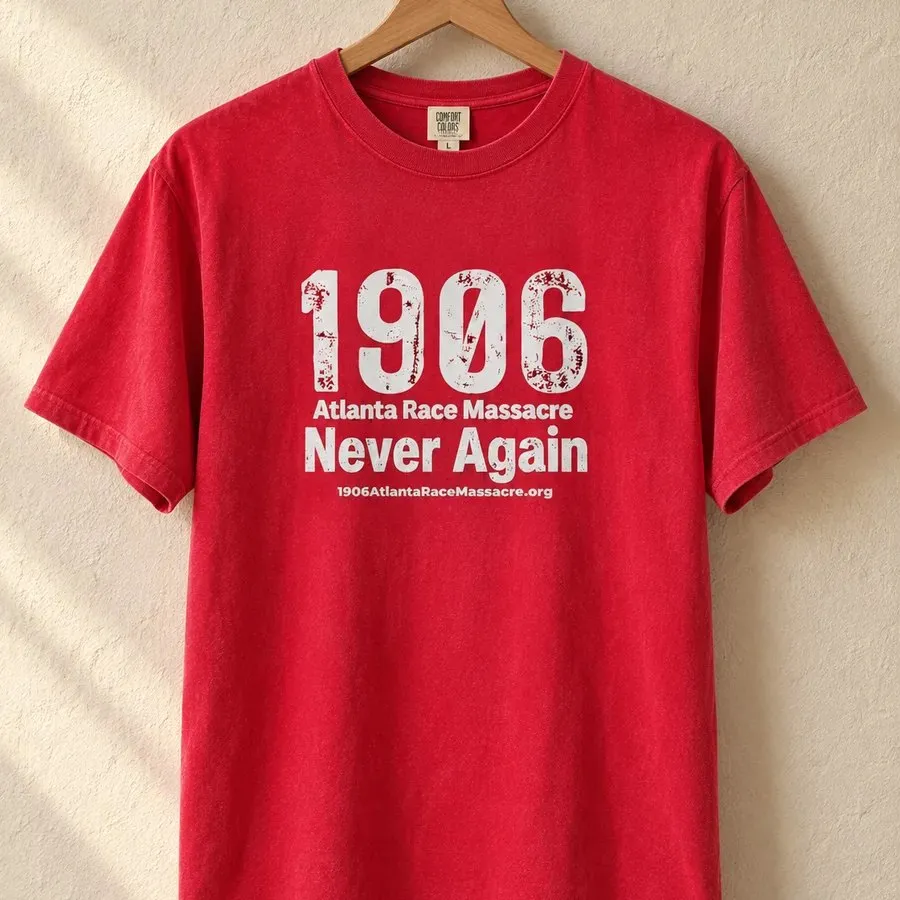
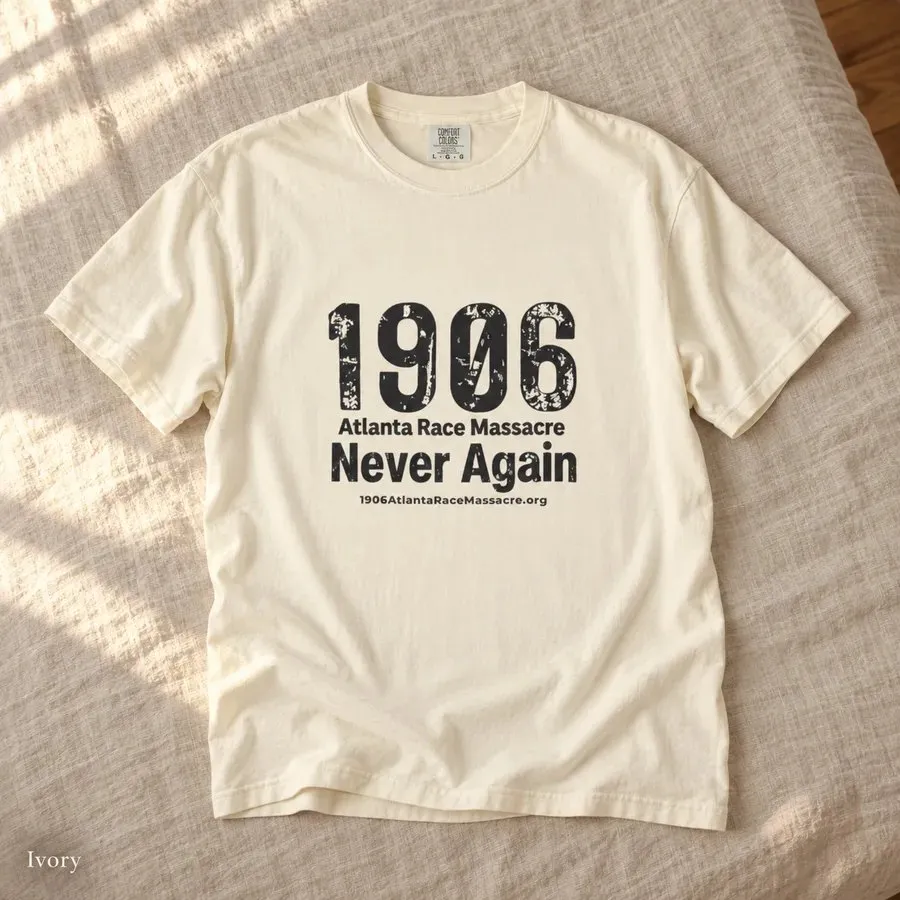
Never Again Shirts
Two shirts that say 1906 Atlanta Race Massacre, Never Again.
All proceeds go to the Coalition. Printed to order in Atlanta by Muskrat & Rorke on heavyweight cotton. $26 each, sizes S to 3XL. You order on their site, and they ship it.